Design Evolution
Personas
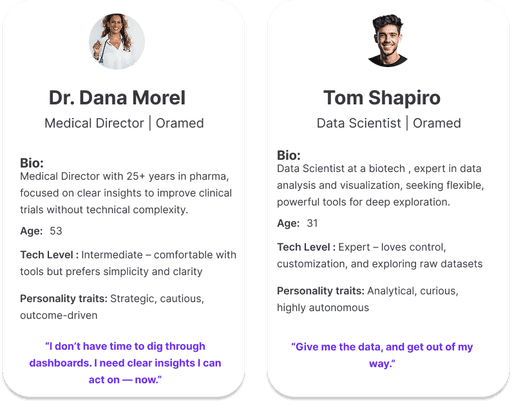
We began by identifying our two core users:
Dana, a Medical Director seeking clarity without technical overhead,
Tom, a data-savvy scientist needing depth and flexibility.
To better understand their expectations, we analyzed competitors like Flatiron and PhaseV, identifying key gaps:
Overwhelming interfaces for non-technical users
Lack of control over data modeling for advanced users
Poor visibility into trial insights and success rates
Based on this, we formed our initial hypothesis:
"Researchers need a flexible, intuitive platform to explore, compare, and simulate patient data for clinical trials—without depending on data teams."
This insight guided every design decision moving forward.
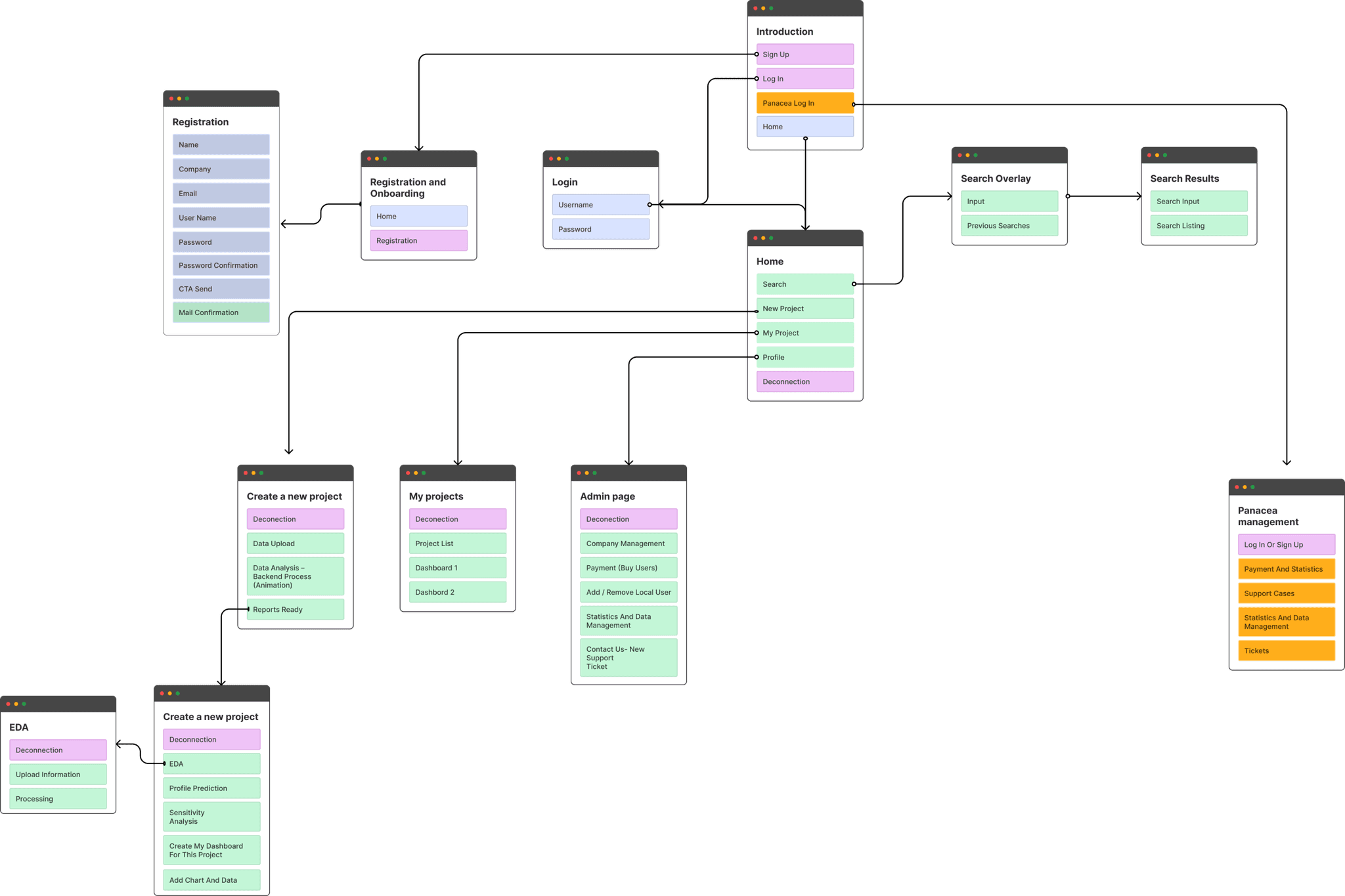
Mapped full user journey: onboarding → data upload → analysis → insights → dashboard
Segmented roles: Client vs. Panacea Admin for clear, streamlined navigation
Onboarding flow: step-by-step to reduce friction and maximize completion
Project creation: natural progression from data to actionable insights
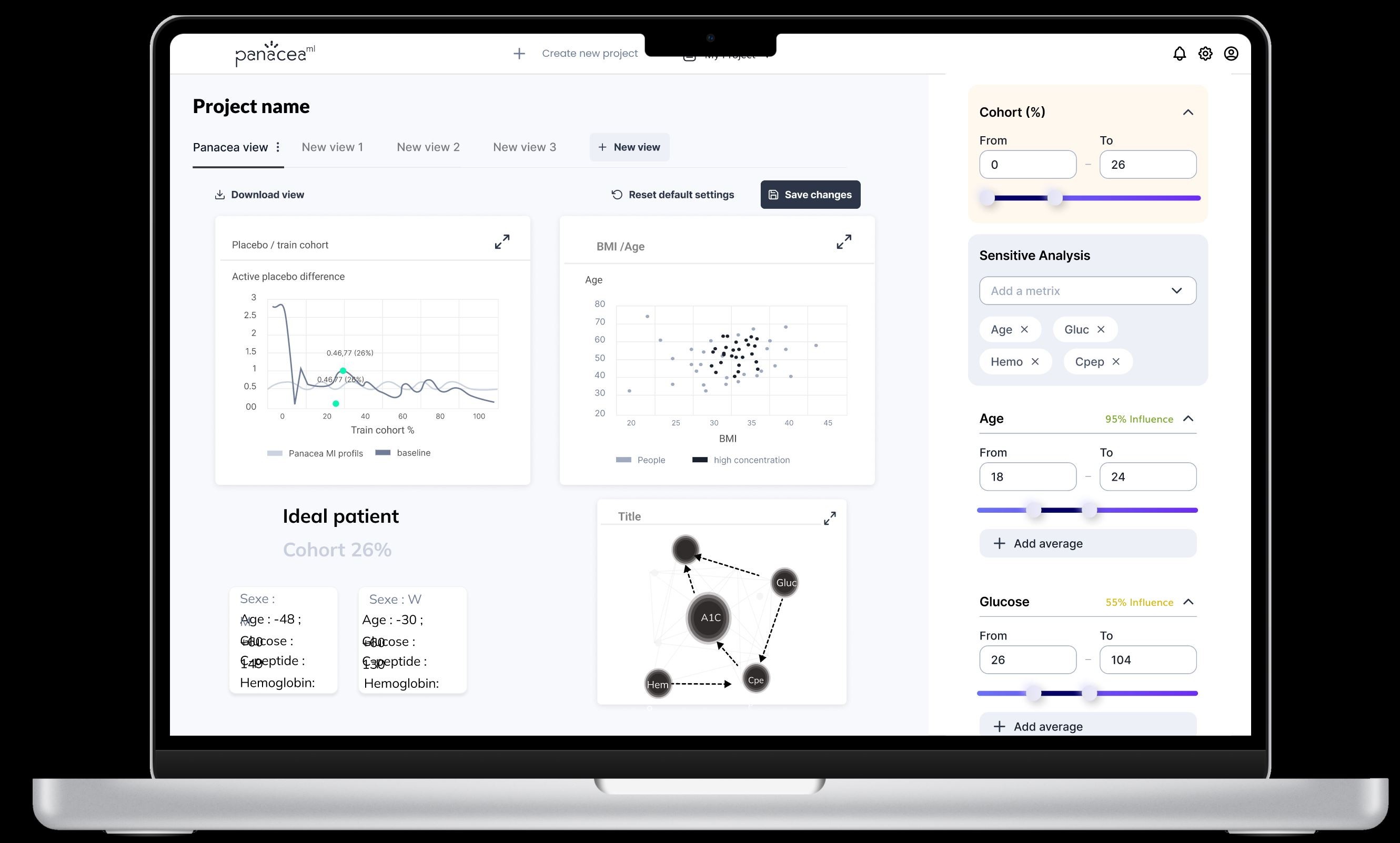
Flexible dashboards: customizable views, compare results, data-driven decisions
Admin area: user management, support, performance monitoring
Ensures scalability, accessibility, and smooth learning curve for all users
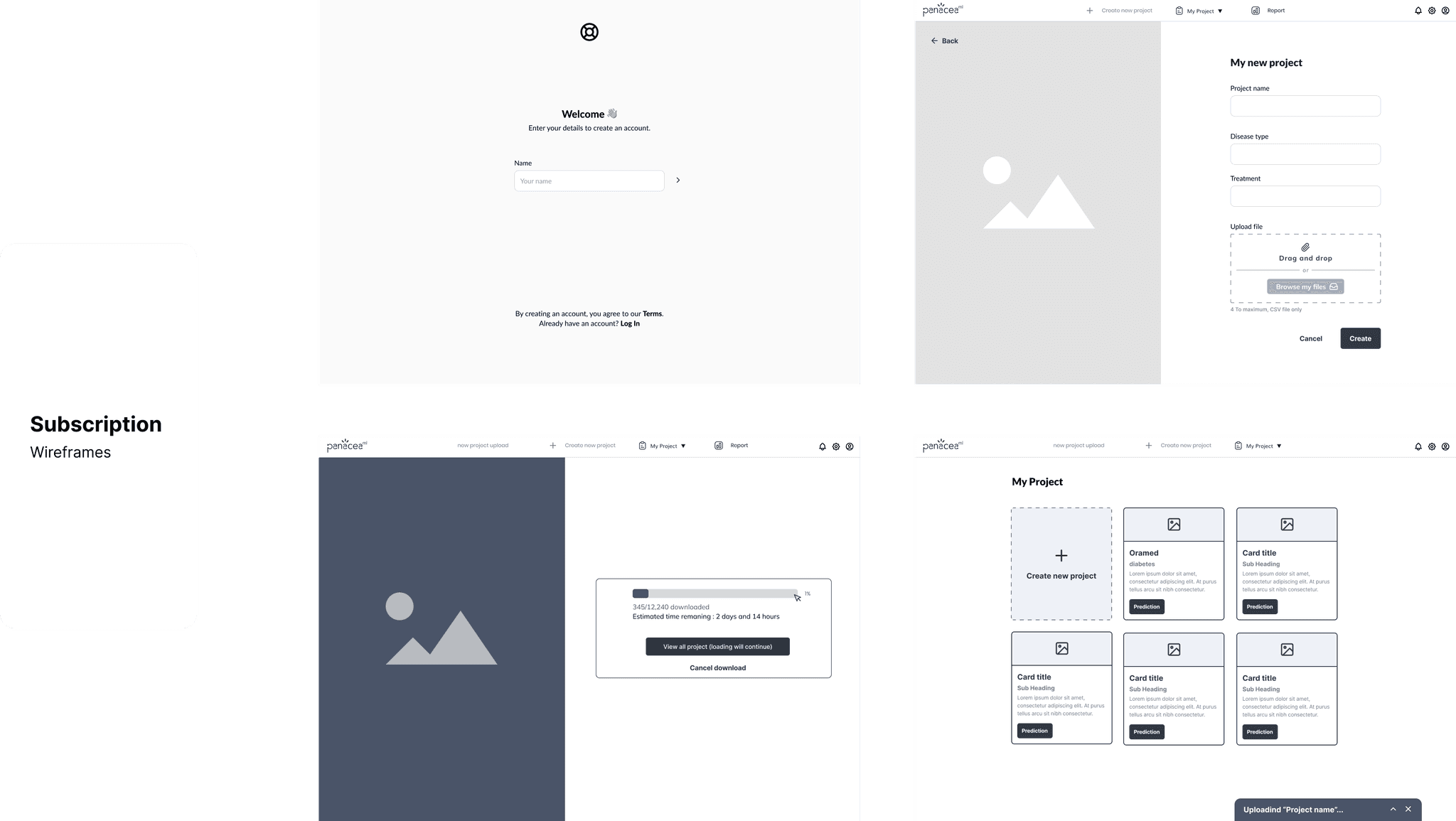
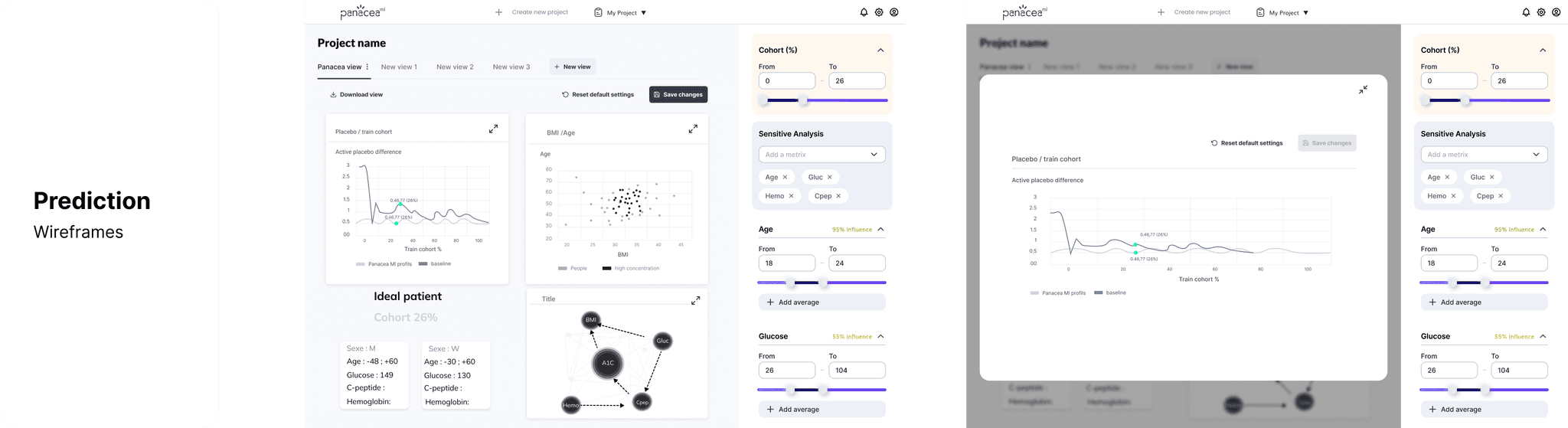
UX Design – Wireframes: First Iterations
"The user had to understand the value of the platform within 5 seconds. I designed a clear, structured, and engaging onboarding to ensure immediate comprehension."
Goals:
Give users a clear overview of the product’s value at first glance
Minimize cognitive load and onboarding time
Highlight the core actions from the start